

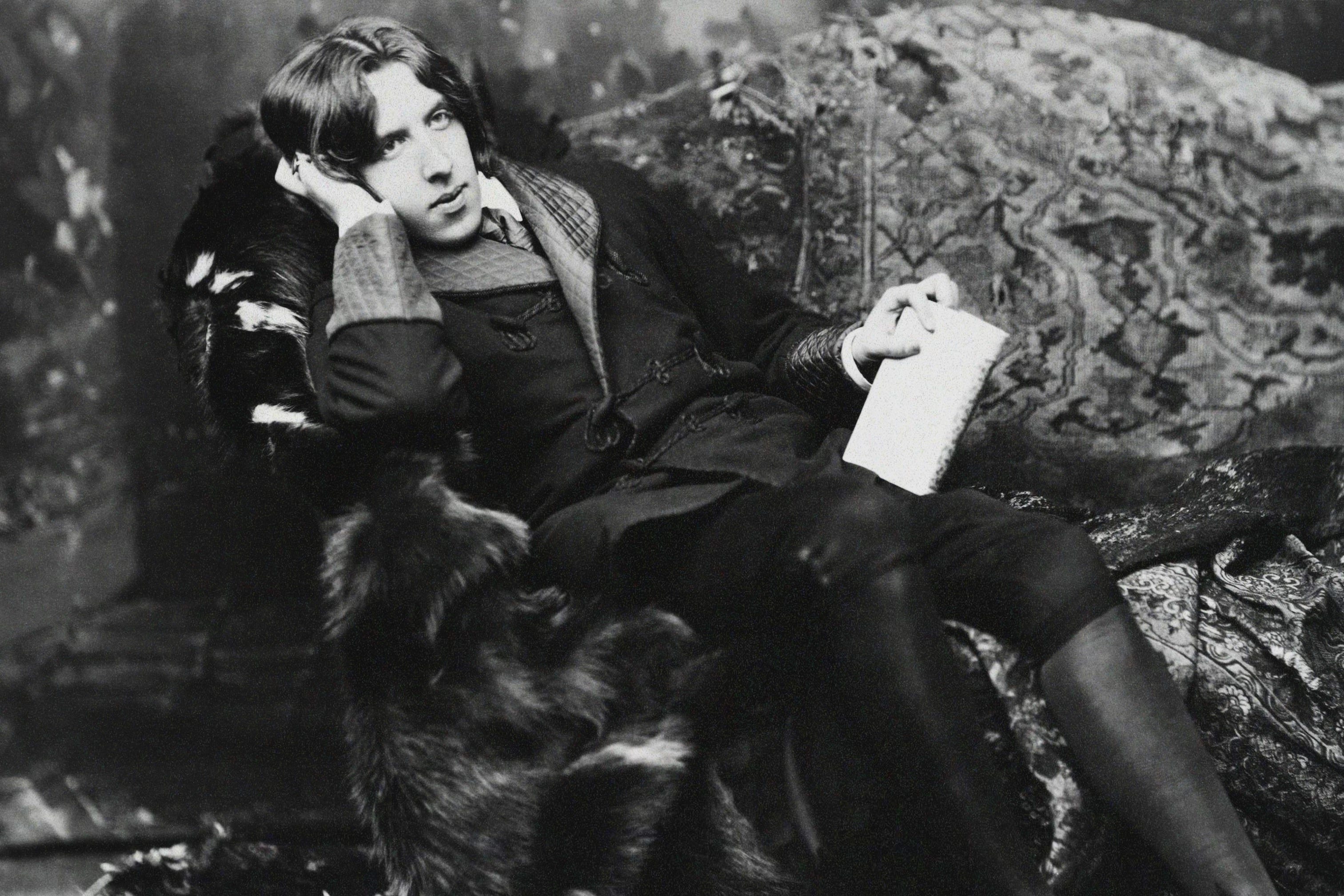
Some novels—upon completion—leave you feeling envious of the individual who gets to experience them for the first time.
This was the case with The Picture of Dorian Gray.
I finally read Oscar Wilde’s masterpiece late last month, at the ripe age of thirty-two.
As I mouthed the closing lines of the final chapter, I was overwhelmed with a sense of awe and a tinge of anger. Why did it take me so long to pluck it from my shelves and splay open its spine?
What astonished me most about The Picture of Dorian Gray is the same immortal qualities the novel shares with its anti-villain, Dorian.
If Wilde were alive in the age of social media, he would be the most quoted writer to ever pick up a pen. This might sound as though I’m understating his abilities.
May I assure you: I’m not.
Instead, I’m speaking to the degree at which Wilde’s prose has endured. It was written well over a century ago—just before the invention of the automobile and the lightbulb. Wilde likely wrote the novel by candlelight.
Yet, the work endures.
It’s hard to make it look easy. This is true for Oscar Wilde’s writing. You read The Picture of Dorian Gray and—as a writer—you turn gangrene with envy.
Wilde makes it look as effortless as an afternoon stroll through Hyde Park—a park he often frequented. But, this assumption is pure fiction. Wilde’s writing process was tedious, if not painful. It was slow. It was meticulous. It was obsessive.
In Wilde’s own words…
"I spent all morning putting in a comma, and all afternoon taking it out."
Furthermore, Wilde was both a physical and vocal writer. He would pace the hardwood of his writing room like a hound, speaking lines into the air as if attempting to coax down a treed raccoon.
Wilde was just as concerned with the sound of a line as he was its meaning. This practice, I believe, is what made Wilde’s prose so deliciously quotable.
47 passages from The Picture of Dorian Gray.
Below are 47 passages I underlined during my journey through The Picture of Dorian Gray. You’ve certainly stumbled upon a few of them once before, somewhere whilst wondering the vast landscape that is the Internet.
Many, however, you’ve likely never read before. As I mentioned earlier in this essay, I’m quite jealous you will be experiencing them for the very first time.
On the dread of silence…
“The sullen murmur of the bees shouldering their way through the long onmown grass, or circling with monotonous insistence round the dusty gilt horns of the straggling woodbine, seemed to make the stillness more oppressive.”
On the captivation of the conversationalist…
“You talk books away.”
On the fickleness of reputation…
“What odd chaps you painters are! You do anything in the world to gain a reputation. As soon as you have one, you seem to want to throw it away. It is silly of you, for there is only one thing in the world worse than being talked about, and that is not being talked about.”
On goodness…
“To be good is to be in harmony with oneself.”
On the ugliness of intelligence…
“But beauty, real beauty, ends where an intellectual expression begins. Intellect is in itself a mode of exaggeration, and destroys the harmony of any face. The moment one sits down to think, one becomes all nose, or all forehead, or something horrid.”
On the courageousness of sinning…
“I represent to you all the sins you have never had the courage to commit.”
On the stupidity of beauty…
“He is some brainless, beautiful creature, who should be always here in winter when we have no flowers to look at, and always here in summer when we want something to chill our intelligence.”
On forging of resilience…
“They have been through the fire, and what fire does not destroy, it hardens.”
On the pleasures of privacy…
“I have grown to love secrecy. It seems to be the one thing that can make modern life mysterious or marvelous to us. The commonest thing is delightful if only one hides it.”
On cynicism as affectation…
“You never say a moral thing, and you never do a wrong thing. Your cynicism is simply a pose.”
On the banality of ideas…
“If one puts forward an idea to a true Englishman—always a rashing thing to do—he never dreams of considering whether the idea is right or wrong. The only thing he considers of any importance is whether one believes it oneself.”
On the indifference of agreeableness…
“You like every one; that is to say, you are indifferent to every one.”
On the sins of influence…
“There is no such thing as a good influence, Mr. Gray. All influence is immoral—immoral from the scientific point of view… To influence a person is to give him one’s own soul. He does not think his natural thoughts, or burn with his natural passions. His virtues are not real to him. His sins, if there are such things as sins, are borrowed. He becomes an echo of some one else’s music, an actor of a part that has not been written to him.”
On hypocrisy…
“I suppose it comes from the fact that none of us stand other people having the same faults as ourselves.”
On unshared love…
“I have given away my whole soul to some one who treats it as if it were a flower to put in his coat, a bit of decoration to charm his vanity, an ornament for a summer’s day.”
On the expiration of beauty…
“It is a sad thing to think of, but there is no doubt that Genius lasts longer than Beauty.”
On the impermanence of youth…
“Yes, Mr. Gray, the gods have been good to you. But what the gods give they quickly take away. You have only a few years in which to live really, perfectly, and fully. When your youth goes, your beauty will go with it, and then you will suddenly discover that there are no triumphs left for you, or have to content yourself with those mean triumphs left for you, or have to content yourself with those mean triumphs that the memory of your past will make more bitter than defeats.”
On the risk of faith…
“Those who are faithful know only the trivial side of love: it is the faithless who know love’s tragedies.”
On giving in to temptation…
“The only way to get rid of a temptation is to yield to it. Resist it, and your soul grows sick with longing for the things it has forbidden to itself, with desire for what its monstrous laws have made monstrous and unlawful.”
On the beauty of tragedy…
“Behind every exquisite thing that existed, there was something tragic.”
On drowning the senses…
“Lord Henry went out to the garden, and found Dorian Gray burying his face in the great cool lilac-blossoms, feverishly drinking in their perfume as if it had been wine.”
On the relationship between the soul and the senses…
“Nothing can cure the soul but the sense, just as nothing can cure the senses but the soul.”
On lack of attachment…
“I never approve, or disapprove of anything now. It is an absurd attitude to take towards life. We are not sent into the world to air our moral prejudices. I never take any notice of what common people say, and I never interfere with what charming people do.”
On the differences between value and cost…
“Nowadays people know the price of everything, and the value of nothing.”
On avoidance…
“He watched it with that strange interest in trivial things that we try to develop when things of high import make us afraid, or when we are stirred by some new emotion from which we cannot find expression, or when some thought that terrifies us lays sudden siege to the brain and calls on us to yield.”
On marriage…
“Men marry because they are tired; women, because they are curious; both are disappointed.”
On latent potential…
“Don’t be afraid. There are exquisite things in store for you. This is merely the beginning.”
On the weight of selfishness…
“There are many things that we would throw away if we were not afraid that others might pick them up.”
On the discontent of opposing generations…
“I feel that wherever was good enough for our fathers is not good enough for us.”
On lust and longing…
“I want the dead lovers of the world to hear our laughter, and grow sad. I want a breath of our passion to stir their dust into consciousness, to wake their ashes into pain.”
On the sexuality of gardens…
“The tulip-beds across the road flamed like throbbing rings of fire.”
On the cautions of mauve and pink…
“Never trust a woman who wears mauve, whatever her age may be, or a woman over thirty-five who is fond of pink ribbons. It always means that they have a history.”
On ignorance being bliss…
“If one doesn’t talk about a thing, it has never happened.”
On the secrets of generosity…
“People are very fond of giving away what they need most themselves. It is what I call the depth of generosity.”
On the charms of ambition and history…
“I like men who have a future, and women who have a past.”
On loving, judging and forgiving our parents…
“Children begin by loving their parents; as they grow older they judge them; sometimes they forgive them.”
On the observation of beauty…
“The curves of your lips rewrite history.”
On curiosity…
“I asked the question for the best reason possible, for the only reason, indeed, that excuses one for asking any question—simple curiosity.”
On the reality of proposals…
“I have a theory that it is always the women who propose to us, and not we who propose to the women.”
On the strangeness of happiness…
“When we are happy we are always good, but when we are good we are not always happy.”
On the difficulty of the muse…
“Women, as some witty Frenchman once put it, inspire us with the desire to do masterpieces, and always prevent us from carrying them out.”
On the power of taking blame…
“This is a luxury in self-reproach. When we blame ourselves we feel that no one else has a right to blame us.”
On the timing of scandals…
“Here, one should never make one’s debut with a scandal. One should reserve that to give an interest to one’s old age.”
On the lateness of resolutions…
“I remember you saying once that there is a fatality about good resolutions—that they are always made too late. Mine certainly were.”
On the dangers of wisdom…
“We live in an age that reads too much to be wise, and that things too much to be beautiful.”
On fast company…
“Yes: it was certainly a tedious party. Two of the people he had never seen before, and the others consisted of Ernest Harrowden, one of those middle-aged mediocrities so common in London clubs who have no enemies, but are thoroughly disliked by their friends; Lady Ruxton, an over-dressed woman of forty-seven, with a hooked nose, who was always trying to get herself compromised, but was so peculiarly plain that to her great disappointment no one would ever believe anything against here; Mrs. Erlynne, a pushing nobody, with a delightful lisp, and Venetian-red hair; Lady Alice Chapman, his hostess’s daughter, a dowdy dull girl, with one of those characteristic British faces, that, once seen, are never remembered; and her husband, a red-cheeked, white-whiskered creature who, like so many of his class, was under the impression that inordinate joviality can atone for an entire lack of ideas.”
On behavior changing with the age…
“Nowadays all the married men live like bachelors, and all the bachelors live like married men.”
Let’s close this out.
A heart-breaking end.
Sometime in the 1890s, Oscar Wilde struck up a relationship with a very powerful man’s son, the Marquess of Queensberry.
The Marquess was outraged. He left a calling card at Wilde’s club, accusing the playwright of sodomy. Wilde responded by suing his assailant for libel.
Unfortunately, the lawsuit backfired.
Evidence presented during the trial led to Wilde being prosecuted for “gross indecency. This was the criminal charge used in England, at the time, for sexual acts between men.
Wilde was sentenced to two years of hard labor. This destroyed his finances, ruined his reputation, crumbled his family and devastated his health.
Prison life weakened Wilde immensely.
After his release in 1987, he lived in poverty and poor health, relying on his friends for financial support while he continued to write. He died at the age of forty-six, from meningitis that had wormed its way into his brain.
Wilde left the world with the same flair that can be felt in the lines he wrote. As he laid on his death bed, staring up at the ceiling, his last words were…
“My wallpaper and I are fighting a duel to the death. One or the other of us has to go.”
Despite his far too early passing, his prose will live on forever.
I read his complete works at 16. Sometimes I speak his words not citing them. Because "all great thoughts have already been thought; it is only necessary to think them again." He has been both inspiring and paralyzing my whole life. Why bother writing when he exists? https://denisekohnke.substack.com
This was so satisfying to read. To know you are envious of me now is a beautiful feeling. I’m joking of course. Thank you for this great newsletter, as a first time reader of Oscar Wilde’s prose, I am in awe of his ability to strike deep with his words. Thx Cole