

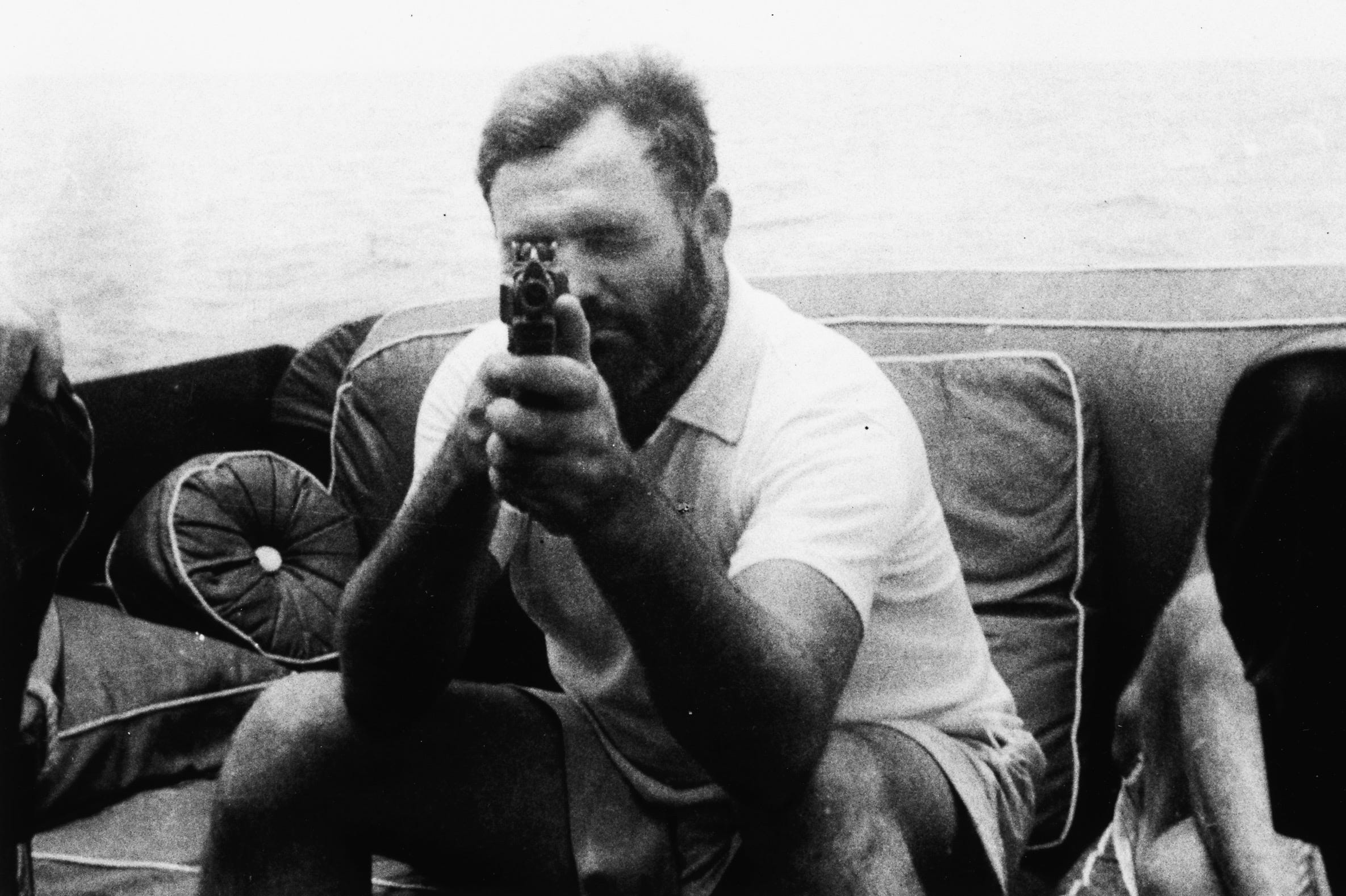
Every year, thousands of old, plump, sunburnt men get together in Key West, Florida. Together, they celebrate Hemingway Days.
To fully embody the spirit of their literary idol, the whole drunken lot of them grow out their snow-white beards, comb what’s left of their hair, wear berets and slip into turtlenecks.
Tall tales cast big shadows.
Hemingway’s legend as a man seems to overshadow his accomplishments as a writer.
I’d wager few who make the pilgrimage out to Key West have ever cracked open and read The Sun Also Rises, A Farewell to Arms or For Whom the Bell Tolls.
He was said to have fought bulls. Shot lions. Punched out professional boxers. Stole urinals. Drank alcoholics under the table. Survived gunshot wounds. Walked away from plane crashes. And, recovered from anthrax.
However, despite the man’s devil-may-care persona, he was about as insecure as a Chihuahua in a K-9 Unit composed of Belgian Malinois—at least as a young writer yet to have made a name.
He barked louder than he bit.
On July 9, 1924, a 24-year-old Hemingway wrote a letter to his friend, the poet Ezra Pound. He was broke, scared shitless, discouraged and paranoid other writers might steal his ideas.
Reading the letter now, it’s difficult not to smirk at the young writer’s fears.