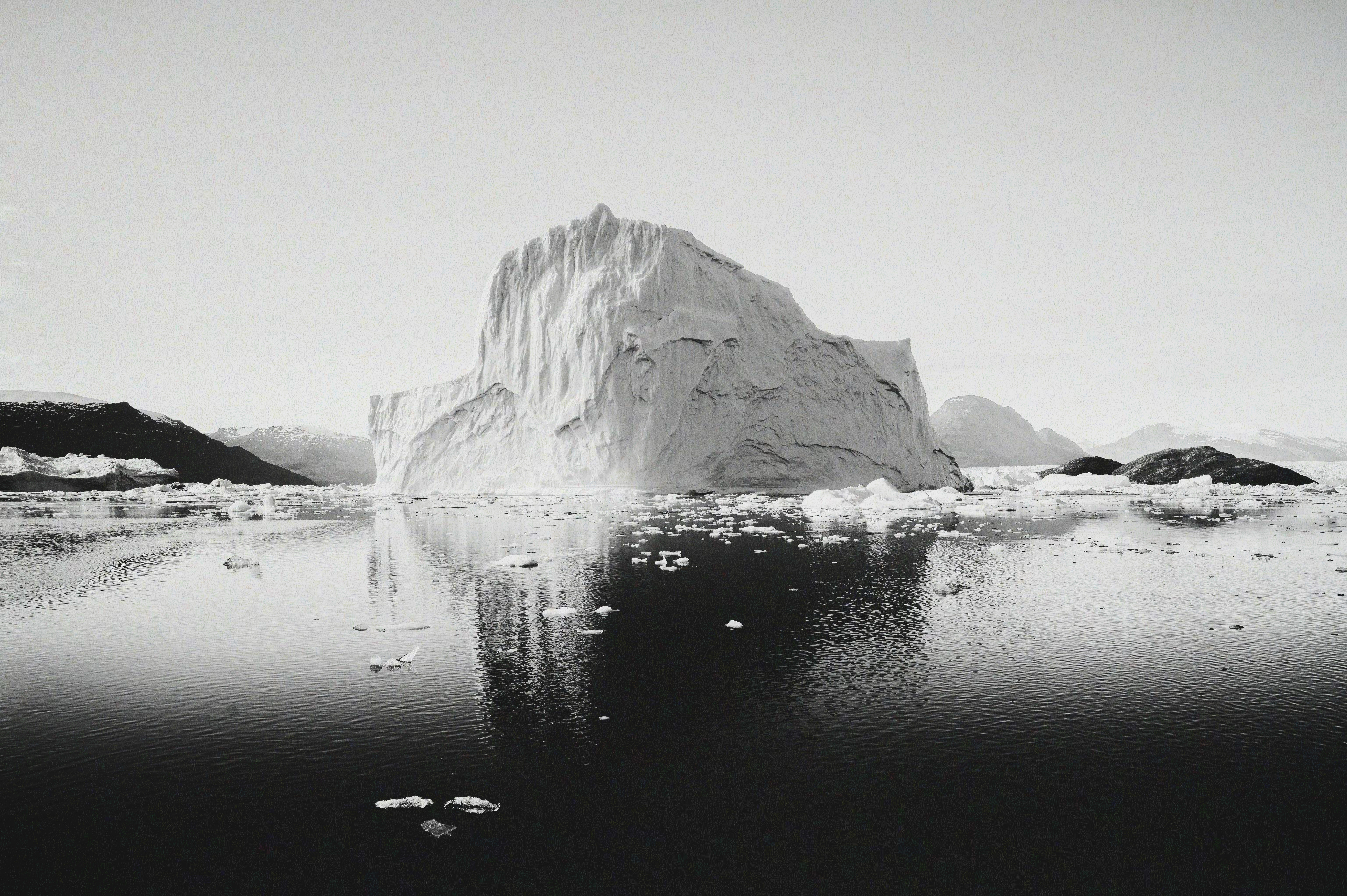
Ernest Hemingway believed omission made a story stronger.
Like an iceberg invisibly towering below the ocean’s surface, he wrote with the belief that most of a story should be hidden from the reader, leaving ample room for the imagination to run wild.
Hemingway’s Iceberg Theory is most prevalent in the intimate moments of his novels and short stories.
Unlike any other writer before him, Hemingway was able to write about intimacy without ever actually addressing the intimate moments.
Take, for example, this passage from A Farewell to Arms…
“That night at the hotel, in our room with the long empty hall outside and our shoes outside the door, a thick carpet on the floor of the room, outside the windows the rain falling and in the room light and pleasant and cheerful, then the light out and it exciting with smooth sheets and the bed comfortable, feeling that we had come home, feeling no longer alone, waking in the night to find the other one there, and not gone away; all other things were unreal.”
At the end of this excerpt, Hemingway writes…
“All other things were unreal.”
Rather than writing in detail about the climax (pun very much intended), he allows the reader to imagine what those other things might be.
Hemingway was never a professor. The closest instruction we have on his Iceberg Theory appears in his de facto book on bullfighting, Death in the Afternoon.
He writes…
If a writer of prose knows enough of what he is writing about he may omit things that he knows and the reader, if the writer is writing truly enough, will have a feeling of those things as strongly as though the writer had stated them. The dignity of movement of an iceberg is due to only one-eighth of it being above water.”
Hemingway’s lesson doesn’t come without caution, though.
Not all omission is created equal. The writer who omits based on lack of knowledge will produce the written equivalent to a leaky boat.
He writes…
A writer who omits things because he does not know them only makes hollow places in his writing.
Over-explaining a topic (that you and the reader are knowledgeable about), isn’t a sign of competence. To the reader, it’s disingenuous. Worse yet, it’s disrespectful of their precious time.
It’s safe to assume that most of Hemingway’s readers had some degree of experience in what one might call mattress gymnastics.
So, Hemingway very intentionally chose to be vague.
If there is any lesson in Hemingway’s Iceberg Theory, it’s that some things—or as Hemingway writes it, other things—are made better by being left unsaid.


