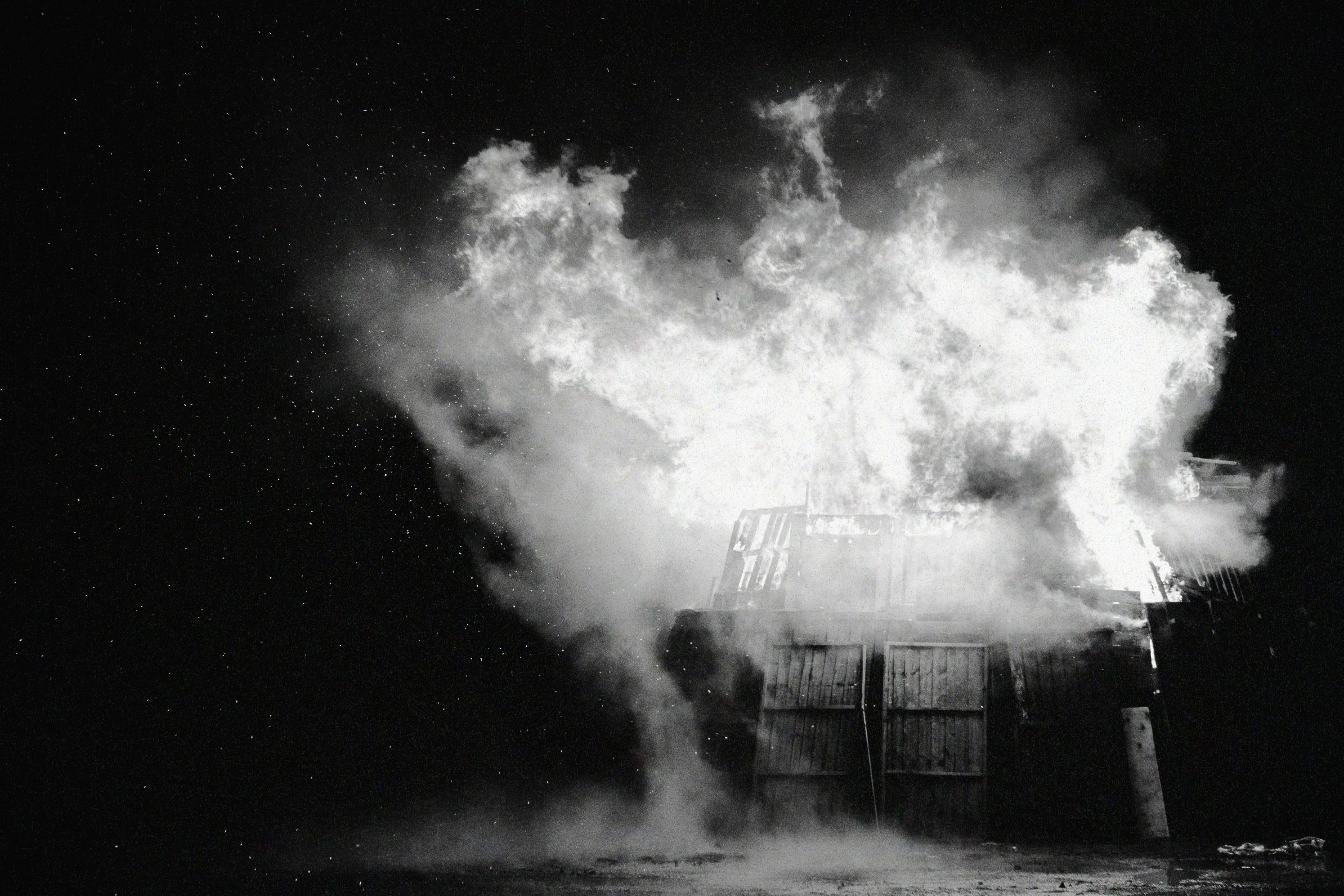
There will be blood.
Why Claude Monet slashed, gouged and burned his own paintings.
Claude Monet was the godfather of the Impressionist movement. He created some of the most breathtaking paintings to ever exist.
He also destroyed them.
Monet had a nasty habit of trashing his own work.
If a painting wasn’t up to his standards, he would slash it with a knife. Tear it in two. Burn it to ashes. Order it removed from exhibitions.
Friends, family members, assistants and dealers all witnessed it. They would watch in horror as Monet thrashed his own masterpieces.
None of his bouts of violence would hold a candle to his meltdown in 1908.
Monet goes nuclear in Paris.
Let’s set the scene.
Monet is preparing for an enormous exhibition at the gallery of Paul Durand-Ruel in Paris. Its focus is his Venetian paintings.
Everything is exactly as it should be. Collectors are waiting patiently. Journalists are standing at the ready. The doors are about to open.
Suddenly, Monet decides the paintings aren’t good enough.
He calls off the entire affair. Monet can’t be convinced otherwise. He orders the paintings removed, destroying many of them with his own two hands.
One of Monet’s most famous works, his Water Lilies series, nearly doesn’t survive.
Thank the nine muses it did.
Today, it’s worth upwards of $80 million.
Destruction was a part of Monet’s process.
Many see Monet’s destructive tendencies as a shortcoming.
However, I would argue otherwise.
I believe Monet’s habit of destroying his own work was his way of holding himself to the highest of artistic standards.
Do I wish he would have placed his paintings in storage instead?
Absolutely.
Unfortunately, this just wasn’t how Monet worked.
Monet treated his art like a phoenix.
By destroying his creations, he made room for creations worthy of his vision.
He couldn’t have known it at the time. But, the ongoing destruction he practiced throughout his storied career would later drive up the value of his paintings tenfold.
Monet was unintentionally eliminating supply to increase demand.
By Cole Schafer.


