

I consider myself an artist.
No, I’m not delusional. I’m not so pretentious as to believe that I’ve been plucked from the same plane as artists the likes of Salvador Dalí, Pablo Picasso or Claude Monet. I’m aware that I don’t share the same DNA as the greats.
But, I’ve always attempted to approach my career like an artist.
David Bowie has forever been my north star.
I could write a 10,000-word essay on Bowie. Perhaps one day I might. Bowie’s body of work is extraordinary, truly. He acted. He painted. He performed. All while creating a catalog of over 400 songs in genres like folk, glam rock, soul, funk, jazz and pop.
Bowie’s superpower—in addition to his surprising business acumen—was his ability to turn on his heel at a moment’s notice. As soon as he reached artistic maturity in a given genre, he abandoned it.
While most artists spend their entire careers developing a recognizable identity, Bowie spent his escaping one. He refused to be defined. As soon as he felt like the world was placing him in a box, he doused it in kerosene, lit a match and then burned the identity he had worked so hard to create.
To a far lesser extent, I’ve attempted to model this behavior in my own career. I’ve written three books of poetry. I’ve released three spoken-word records. I’ve written hundreds—if not thousands—of essays and newsletters. I’ve built an advertising agency in Honey. I’m in the process of building a second.
Due to some rather bizarre life circumstances, I’ve found myself in the same rooms as some of the greatest writers, artists and entrepreneurs in the world.
Many of them seem to have one thing in common: a willingness to reinvent themselves, over and over again.
And so this is the purpose of the essay you’re reading now—this is the topic I’m circling like a hungry vulture—reinvention.
More so, abandonment.
For over a decade, Hulk Hogan was a hero.
He would wave the American flag. He would walk out to Real American by Rick Derringer. He would tell kids to train, say their prayers and eat their vitamins.
This persona carried Hogan from a regional sideshow to mainstream entertainment. He appeared in Rocky III. He hosted Saturday Night Live. He even graced the cover of Sports Illustrated.
He became the face of the WWF.
But, by the mid-1990s, Hulkamania was waning. America was changing. Grit had replaced glam. Antiheroes had replaced superheroes. Black had replaced red, white and blue.
Hogan’s persona had begun to feel corny, if not cringeworthy.
Suddenly, he was being booed.
Hogan seemed to be at the end of his career. He had left the WWF to join WCW, its lesser-known rival. For all intents and purposes, he was washed up.
It was right around this time that two former WWF stars, Kevin Nash and Scott Hall, invaded WCW. The Outsiders—as they’d come to be known—were the ultimate bad boys. And, with America’s changing sentiment, their act was hotter than a tamale in hell.
As Hogan watched hysteria ensue over this duo, something clicked.
On July 7, 1996, Nash and Hall challenged three WCW wrestlers to face them at Bash at the Beach. During the bout, Hogan appeared without warning.
As he entered the ring, Hall and Nash scattered like roaches at the sound of a footfall. One of the “good guys” lay wounded on the mat, gasping for air. Hogan looked around. Every person in the crowd thought he was going to come to the fallen comrade’s rescue—chasing down Hall and Nash like an exterminator.
Instead, he executed his signature leg drop across the wrestler’s throat.
Hogan had turned heel.
The entire arena erupted in a mix of horror and hatred. Fans threw garbage into the ring. One spectator was so disgusted, he attempted to climb over the barricade and take on Hogan himself.
Surrounded by garbage, Hogan introduced a movement that changed the trajectory of professional wrestling forever: The New World Order.
Hulk Hogan was dead. Long live Hollywood Hogan.
Hogan traded his red and yellow garb for black. He darkened his beard and slipped on a pair of shades. He cheated his ass off and treated the audience like shit. He vandalized opponents, hijacked broadcasts, raised hell and behaved like an outlaw.
It worked.
Hogan’s heel turn breathed new life into his career.
For 83 consecutive weeks, WCW’s Monday Nitro beat the brakes off WWF’s Monday Night Raw. Hogan had single-handedly ignited the most commercially explosive period in professional wrestling history.
Overnight, he became the most notorious villain on television.
To save his career, Hogan had to kill the character that had made him so monumentally famous and successful.
He had to reinvent himself.
17 of the most surprising pivots in business history.
Business has its own vernacular for what artists call reinvention and wrestlers call a heel turn. In Silicon Valley, it’s referred to as a pivot.
Some of the planet’s greatest companies began by doing something entirely different from what they’re known for today.
Nokia made paper.
Samsung sold fish.
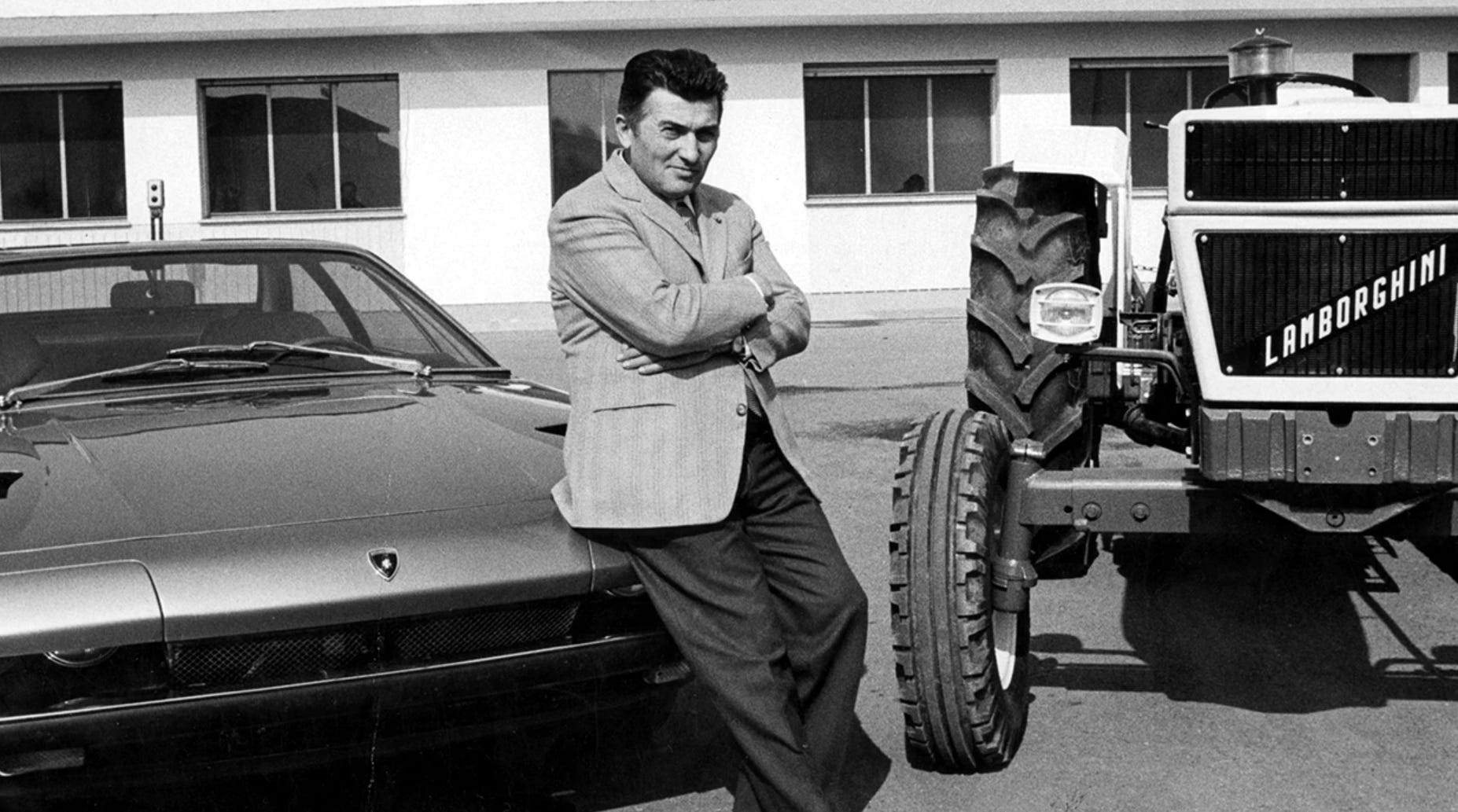
Lamborghini produced tractors.
1. Lamborghini: Tractors → Supercars
Ferruccio Lamborghini was in the tractor business.
After World War II, he built tractors from surplus military machinery. He was making a pretty penny—enough to purchase one of the hottest products in Italy at the time.
Lamborghini owned a Ferrari. But, he wasn’t happy with the car’s clutch. He complained to Enzo Ferrari, who dismissed him as a tractor manufacturer. So, Lamborghini decided to build his own car.
Moral of the story?
Be nice to your customers.
2. Play-Doh: Wallpaper cleaner → Children’s toy
Play-Doh was never meant to be a toy.
It was originally designed to remove soot from wallpaper. As coal heating was replaced with electricity, the business caved in on itself.
Fortunately, a little birdie told the company that teachers were using the material for student crafts. Play-Doh removed the cleaning agents. It added color and fragrance.
Then, it repositioned the product as a toy.
3. Hasbro: Textile remnants → Mr. Potato Head
Hasbro sold fabric remnants and later pencil boxes and school supplies, before stealing a page out of Play-Doh’s playbook.
It got into toys.
Mr. Potato Head became the company’s major breakthrough. It was the first toy advertised directly to children on television.
The toy generated over $4 million in sales within the first few months of its launch.
4. Nokia: Paper mill → Mobile phones
Nokia has been around since 1865.
It began in Finland as a pulp mill. Later, it produced boots, cables and TVs.
In the 1960s, it acquired a company called Finnish Cable Works. It spun up a special division that began producing radio telephones for the Finnish military.
By the late 1990s, it became one of the world’s largest mobile phone manufacturers.
5. Nintendo: Playing cards → Video games
Nintendo was founded in 1889.
Like Nokia, it has manufactured just about everything.
It started out making hand-painted playing cards. Then, it experimented with taxis, love hotels, instant rice and toys.
Eventually, it entered electronic entertainment, creating arcade games and home consoles before releasing the NES.
6. Wrigley: Soap → Gum
William Wrigley Jr. originally sold soap.
He would often include baking powder as a promotional gift. Customers liked the baking powder more than the soap. So he started selling baking powder and giving away chewing gum.
Lo and behold, customers preferred the gum over the baking powder and the cycle repeated itself.
Ironically, the giveaway became the business.
7. A&F: Fishing equipment → Fashion
Abercrombie & Fitch was an outdoor outfitter.
It was widely respected, too. Theodore Roosevelt, Ernest Hemingway and Amelia Earhart all bought their gear from A&F.
The good times didn’t last, though.
By 1976, the company went belly-up. The Limited acquired the name a decade later and transformed it into a youth-focused lifestyle brand.
8. American Express: Freight delivery → Financial services
American Express started as an express-mail company. Eventually, demand for its financial services dwarfed moving packages.
It pivoted from a logistics business into one of the world’s most recognizable financial brands. Today, an Amex card isn’t just a credit card.
It’s a signal to society that you’ve ‘made it.’
9. 3M: Mining company → Innovation conglomerate
3M originally stood for Minnesota Mining and Manufacturing.
Its founders planned to mine corundum for grinding wheels, but the mineral they found proved unsuitable.
Rather than shutter the doors, the company pivoted to abrasives—and later adhesives like masking tape, Scotch tape and Post-it Notes.
10. Samsung: Groceries → Electronics
Samsung began in 1938. But, not in electronics. It was a Korean trading company selling dried fish, flour and noodles.
Samsung later expanded into sugar refining, textiles, insurance and construction.
It’s mind-boggling to think that one of the world’s largest manufacturers of semiconductors and smartphones began by trading fish and flour.
11. Peugeot: Pepper mills → Automobiles
Peugeot started out as a family business.
It manufactured steel products like saw blades, springs, coffee grinders and pepper mills (these are the devices used to grind peppercorns over your fettuccine).
From there, it expanded into bicycles and, eventually, automobiles. Today, it’s one of the largest automobile manufacturers in the world.
Oh, and they still sell pepper mills.
12. Yamaha: Organs → Motorcycles
Back in 1887, Torakusu Yamaha repaired a broken organ.
It must have gone well. Before long, he started manufacturing musical instruments.
During World War II, the company made military equipment like propellers, fuel tanks and wing parts.
It later applied that experience with precision machinery to motorcycles.
13. Avon: Books → Cosmetics
David H. McConnell, the founder of Avon, originally sold books door-to-door.
To get women to listen to his sales pitch, he gave away small perfume samples. Like Wrigley, he found the giveaway was more popular than the product.
He ditched the book business and began selling perfumes and cosmetics.
14. Marriott: Root beer stand → Hotel empire
Back in 1927, J. Willard and Alice Marriott opened a small A&W root beer stand in Washington, D.C. They expanded from there.
First, it was restaurants.
Next, it was airline catering.
Finally, it was hotels.
Today, Marriott is one of the world’s largest hospitality companies, with more than 9,300 properties in 148 countries.
15. Sealed Air: Wallpaper → Bubble Wrap
Bubble Wrap was first created to be three-dimensional plastic wallpaper.
Yes, the idea was as bad as it sounds.
The inventors then tried to market it as greenhouse insulation.
Once again, it flopped.
Finally, they discovered its true purpose: protective packaging. IBM became one of their most important early customers.
16. Raytheon: Refrigeration technology → Missiles
This is insane.
Raytheon began as the American Appliance Company, initially pursuing technology that could make household refrigeration more practical.
That effort failed miserably, but its next invention didn’t. The company developed a gaseous rectifier tube that made radios far more useful.
From there, it moved into radar, microwave technology and, eventually, missiles.
17. Rovio: Fifty flops → One viral game
Rovio was born out of Finland’s mobile-game ecosystem.
It created roughly 50 games.
None of them stuck.
As the company was nearing bankruptcy, someone had an idea for a game in which players fired angry birds at green pigs.
Angry Birds became one of the most successful mobile-game franchises in history.
Reinvention requires sacrifice.
Every successful artist, professional wrestler and enterprise risks becoming a caricature of itself.
Artists play the same hits.
Professional wrestlers perform the same moves.
Enterprises roll out the same products.
With time, the very identity that once made them a sensation ends up being the dead weight that drags them down.
After the hysteria surrounding The Rise and Fall of Ziggy Stardust and the Spiders from Mars, David Bowie sacrificed Ziggy Stardust. He could have spent the rest of his career squeezing every dollar out of Moonage Daydream and Starman. By abandoning the character, he made room for albums like Station to Station, Low, Heroes, Scary Monsters and Blackstar.
After nearly a decade of Hulkamania, Hulk Hogan joined the dark side. He sacrificed the character that made him famous for one that made him dangerous. Hollywood Hogan gave him something Hulk Hogan no longer could: a future.
Bubble Wrap abandoned wallpaper. Marriott abandoned root beer. Samsung abandoned groceries. Abercrombie & Fitch abandoned fishing rods. Wrigley abandoned soap. Avon abandoned books.
What got you to today, won’t get you to tomorrow.
Oftentimes, the most difficult thing to abandon isn’t a failure. One of the beauties of failure is that it gives you permission to walk away. Success is much harder to walk away from.
But, this is why it’s called a sacrifice.
Another great piece. Loved the end...that's why it's sacrifice...from Bowie to Hollywood Hogan!
This was extremely fascinating. And it even gave me a future book idea. LOL